

Mexico weighs gasoline price cap amid rising costs
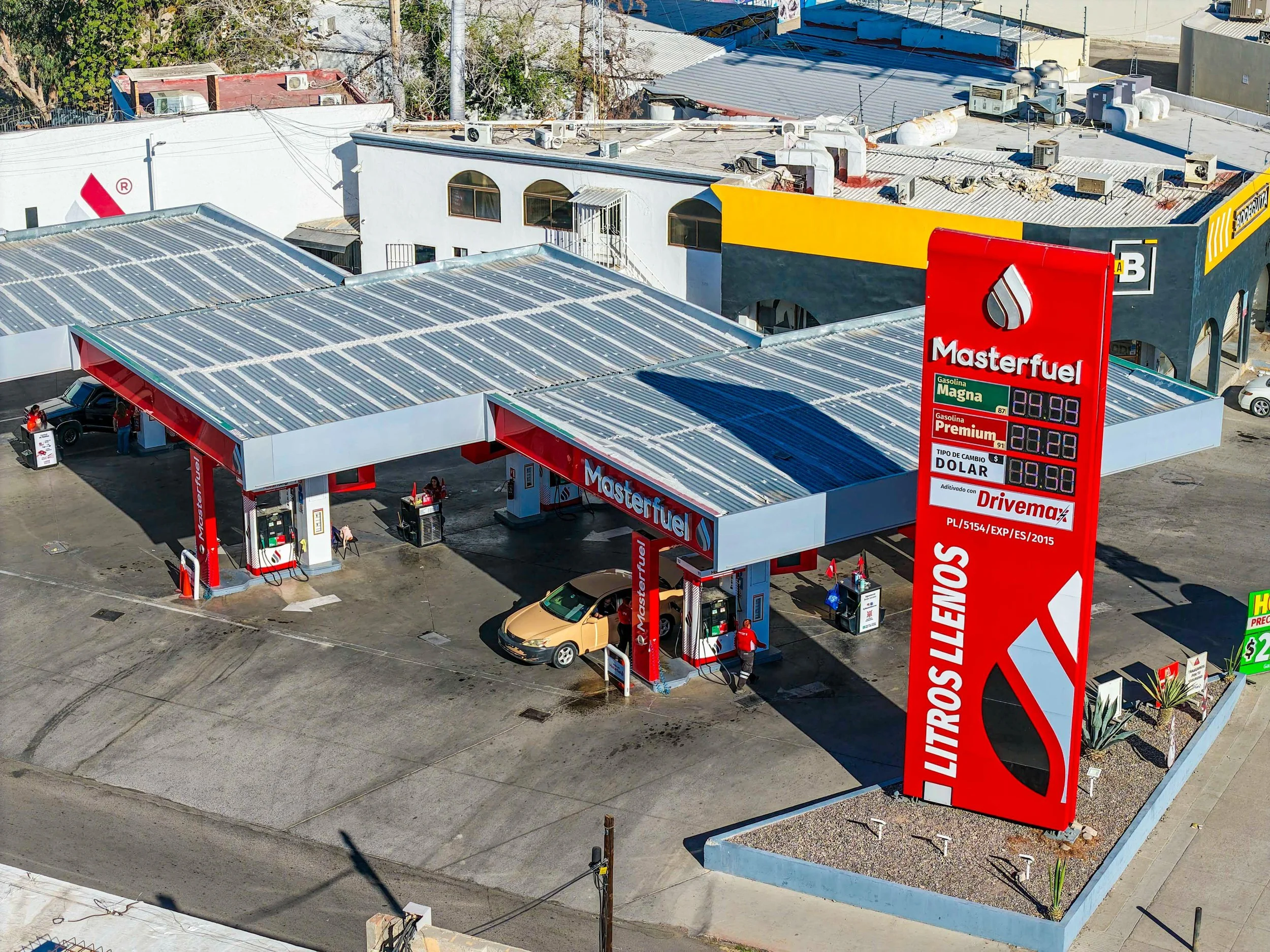
Masterfuel gas station in Hermosillo, Mexico. Image credit: Luis Gutierrez / Norte Photo / Alamy
by Eduardo García.
Mexican consumers have been feeling the pinch of rising gasoline prices in recent months, a trend that contradicts government promises to keep fuel costs in check. Regular gasoline prices have surged faster than inflation since February of last year, prompting President Claudia Sheinbaum to explore a controversial solution: a voluntary cap on fuel prices.
"We are working with gas station operators to voluntarily set a maximum price for fuel sales," Sheinbaum said at a recent news briefing. "This is not about directly fixing prices, but about reaching a voluntary agreement."
The proposal echoes a policy implemented under Sheinbaum’s predecessor, former President Andrés Manuel López Obrador, who in August 2021 imposed a maximum price cap on liquefied petroleum gas (LPG) after months of steep price increases threatened his pledge to keep energy costs below the inflation rate.
That policy was initially successful, keeping LPG price hikes far below Mexico's broader Consumer Price Index (CPI) growth. During López Obrador's six-year term, LPG prices rose just 1.2%, compared to a 34.8% increase in general inflation.
Sheinbaum now appears eager to replicate that strategy with gasoline. However, experts warn that price caps, while offering short-term relief, can lead to unintended economic consequences, as seen with LPG. Many consumers are now facing reduced liquified petroleum gas supply options, as distributors claim the price cap cut into their profitability, forcing them to scale back operations and lay off workers.
“It is never advisable to cap prices,” said Luis Miguel Labardini, an energy expert at consultancy Marcos y Asociados. “It’s good to monitor prices and penalize gouging, but gasoline prices in Mexico vary significantly by region. Are you going to set different caps for 200 regions? I don’t see this being well implemented.”
For years, the Mexican government has used tax policy to stabilize gasoline prices. Since 2017, the Ministry of Finance has adjusted the Special Tax on Production and Services (IEPS) weekly to help gas stations keep prices steady. Under this mechanism, authorities apply tax reductions to offset fluctuations in global fuel prices. Given that Mexico imports about 60% of its fuel, this adjustment has played a crucial role in shielding consumers from extreme price swings. During the last six year, the price of regular gasoline rose 21.1%, below again the nation’s overall inflation rate for that period.
However, the latest price increases suggest that gas station operators may not be passing on the government's tax relief to consumers. Instead, they might be pocketing some of the subsidies. That possibility has infuriated Sheinbaum.
"It can’t be that gas stations are making six pesos per liter in profit," she recently said, implying that some retailers are using tax cuts to boost margins rather than lowering prices for consumers.
With Mexico facing a tight fiscal situation and a large deficit inherited from the previous administration, Sheinbaum is under pressure to reduce spending and use its tax revenues as efficiently as possible. The possibility that fuel retailers are profiting off subsidies has made her proposed price cap more appealing, despite the risks.
“The government’s fiscal position is so fragile that Sheinbaum appears unwilling to keep sacrificing tax revenue,” added Labardini. “Instead, she seems to be looking at price controls as an alternative way to help consumers.”
Analysts argue that price caps are not a sustainable solution, as they could stifle growth in Mexico’s fuel distribution industry. The country opened its fuel market to private investment in 2014, but López Obrador later restricted competition by severely limiting permits for new gas stations, especially in his first three and a half years in office.
Economists contend that increasing the number of fuel retailers would naturally put downward pressure on prices, making price caps unnecessary.
"The best way to control prices is to allow the market to function properly," said a fuel industry analyst who requested anonymity. "If there were stronger competition, retailers wouldn’t be able to pocket subsidies instead of passing them on to consumers."
If history is any guide, gasoline price caps could create more problems than they solve. The LPG price cap initially kept costs low but later led to supply disruptions. As profit margins shrank, some LPG distributors shut down plants, cut delivery routes, and laid off workers. By 2023, LPG prices had once again outpaced inflation, and distributors protested the caps.
If a similar scenario unfolds in the gasoline market, consumers could ultimately bear the cost of price controls—through fuel shortages, deteriorating service, or both.