

Gabbard’s comments undercut Sheinbaum’s resistance narrative
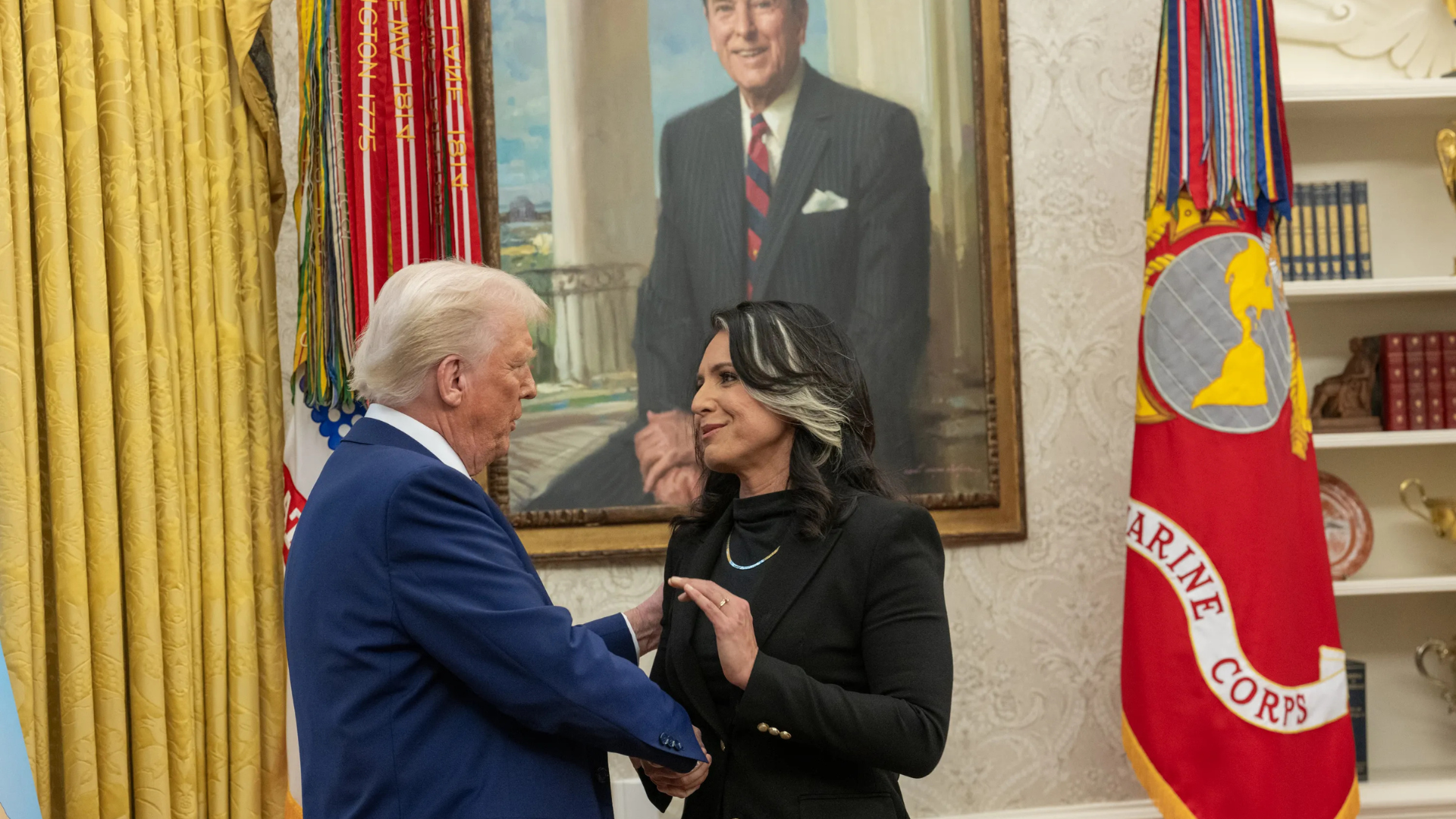
US President Donald Trump with Director of National Intelligence Tulsi Gabbard in the Oval Office. Image credit: The White House
by David Agren.
A new intervention from US President Donald Trump’s camp is casting doubt on portrayals of Mexican President Claudia Sheinbaum standing up to Trump’s hardline immigration policies. Tulsi Gabbard, Trump’s Director of National Intelligence, praised Mexico’s role in stopping migrants before they reached the US border - but credited that action not to Sheinbaum’s resolve, but to pressure from Trump.
“The President of Mexico told me, sir, she turned around over a half a million people in Mexico before they ever reached our border,” Gabbard told Trump. “We should be counting those as deportations because they never even made it to the border because she turned them around because you forced her to. So those are all people that never even came here because they got the message because you were so aggressive.”
The comments raise questions about Sheinbaum’s efforts to portray herself as a defender of Mexican sovereignty, as she gains praise at home and abroad for her handling of Trump’s threats and demands.
Last week, adverts featuring Kristi Noem beamed into Mexican homes during football matches and telenovelas earlier this month, in which the US homeland security secretary told potential migrants to stay put. “If you come to our country and break our laws, we will hunt you down,” Noem said in English. “Criminals are not welcome in the United States.”
Reaction to adverts – much of it negative – lit up Mexican social media. Pro-government influencers branded the adverts as racist. Sheinbaum rebuked the adverts the next day, too, saying at her morning press conference, “This ad has a very high level of discriminatory content.”
The National Council to Prevent Discrimination (CONAPRED) asked broadcasters to withdraw the adverts, calling them, “Discriminatory.” The president announced new legislation the next day to forbid foreign governments from “engaging in ideological and political propaganda in our country.”
Sheinbaum has earned attention and adulation at home and abroad for her handling of US President Donald Trump, who has threatened tariffs and demanded Mexico stop migration and fentanyl from crossing the border.
The New York Times described her actions as marking “a line in the sand” after bowing to Trump’s demands on migration and security. But the act to prohibit anti-migrant adverts continued a pattern of symbolic resistance and saving face on Sheinbaum’s part.
Her resistance involves mostly mediatic measures capturing widespread coverage in traditional and social media, which show her defending the national interest and talking back to Trump in a non-threatening matter.
Sheinbaum threatened legal action against Google if its maps continued reading “Gulf of America” – as Trump rechristened the Gulf of Mexico. She famously trolled Trump by pulling out an old map demarcating Mexican America for territory now part of the United States.
At times, the pushback involved serious topics. Sheinbaum responded to the US designating drug cartels as foreign terror organizations by announcing constitutional amendments to “protect sovereignty.” Another amendment promoted stiffer penalties for foreigners involved in smuggling guns.
“It’s always playing to an internal audience and the left and liberal media desperate to position her as the anti-Trump but never saying something against Trump,” said Bárbara González, a political analyst from Monterrey.
Her pushback on the offensive DHS adverts overshadows Mexican role as a migration enforcer since before Trump took office. Trump administration officials also speak effusively of Mexico’s work stopping migrants heading for the U.S. border.
Border czar Tom Homan got combative during a press briefing on whether Mexico would pay for the border wall.
“Trump said Mexico gonna pay for the wall. They have in a roundabout way, have they not?” he said. “Putting 10,000 military on their northern–southern border, taking the action they did with Remain in Mexico, they didn’t have to do that. They’re doing it. Putting military on the southern border have moved illegal immigration to a record low.”
Noem, who has proved controversial for turning ICE raids into opportunities for self-promotion, had less effusive words for Sheinbaum after their March meeting in Mexico City. “Secretary Noem made it clear there is more work to be done to stop the flow of drugs and illegal aliens into the US,” her office said on X.
Still, Sheinbaum speaks of a respectful relationship with Trump – with the US president expressing respect for her, too. The 10,000 National Guard members were sent to the border as part of the concessions given to avoid tariffs – Sheinbaum heroically hailed for keeping a cool head.
Canada got a similar deal, even as Trump belittled outgoing-prime minister Justin Trudeau as “governor” and spoke of annexing the country. His successor, Prime Minister Mark Carney, retained his premiership Monday after campaigning on a platform of standing up to Trump amid a surge of nationalism with Canadians avoiding cross-border travel and boycotting US imports. Trump told reporters on Wednesday that he had spoken with Carney. “I think we’re going to have a great relationship,” he said.
Canada has confronted Trump – and acquiesced on some demands – without symbolic resistance and seems to have emerged unscathed. Sheinbaum should consult with Carney on their first phone call for the secret of dealing with Trump – without symbolic resistance.