

CDMX nightlife crackdown hits independent cultural spaces
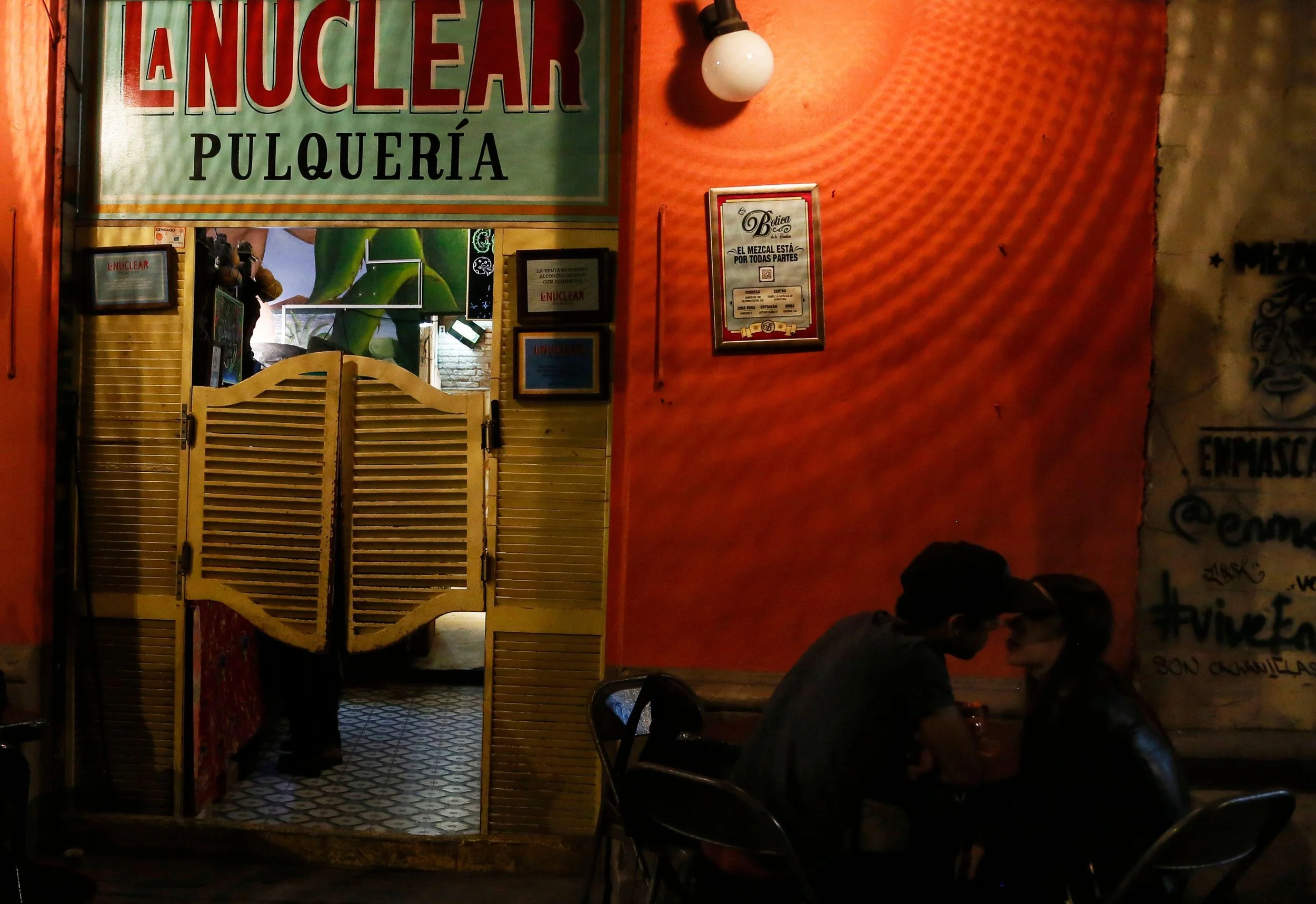
A couple outside of a Mexico City pulqueria. Image credit: Associated Press / Alamy.
by Madeleine Wattenbarger.
It was 8pm on a Thursday in March when officials from the Mexico City Institute of Administrative Verification (INVEA) showed up at La Caña, a seafood restaurant, LGBTQ+ bar and cultural center in the Doctores neighborhood. But the routine code check soured before it began.
“They arrived with excessive violence, with riot police, with high-calibre weapons,” recalls Ali Gua Gua, musician and representative of the cooperative-run space. “They came in pushing people, taking their tostadas away, yelling.”
La Caña hosts free concerts, literary events and cultural activities nearly every night. To make ends meet, it operates as a restaurant, with a permit that allows for the sale of alcohol with food. The night when the INVEA arrived, one table of diners was still awaiting their dinner order with two beers on the table. The officials seized on the momentary lapse: “They said, no, this isn’t a restaurant, this is a bar, and we’re going to shut you down.”
The visit was part of an ongoing city-wide operative called La Noche es de Todas y Todos, ostensibly intended to regulate businesses that sell alcohol without the correct permits or to minors. Since the program began in November, the Mexico City government has reported hundreds of establishments closed for code violations. The INVEA did not immediately respond to an interview request.
But the nightlife operation has also swept up cultural spaces like La Caña, venues that showcase independent artists at no cost to the public. The shutdown sent La Caña into a bureaucratic labyrinth. Fees for sanctions start at 20,000 - 30,000 pesos, a significant hit for small neighborhood businesses. In response to the shutdowns, they’re pushing for improved regulations of independent cultural spaces.
Legally, cultural institutions can only sell beer until 11pm, a restriction that some venues overcome through ticket sales; others go the restaurant-bar route, leaving them more vulnerable to potential shutdowns. “We don’t live on culture. We live on beer sales,” Ali explains. “We don’t want to charge cover, because we don’t want culture to be for the elites.”
Also affected by the INVEA operation were over a dozen establishments that sell pulque, the pre-Hispanic fermented drink. A few weeks earlier, the operative stopped by Pulquería La Canica on Insurgente Norte. Four trucks of police pulled up outside the business. The INVEA officials requested only that the management add a sign with operating hours, but 14 other pulquerías across the city weren’t as lucky.
To combat the closures, pulque enthusiasts, producers and vendors came together in a united front, Resistencia Pulquera. They organized a protest outside the historic pulquería La Paloma Azul, also closed in the operation. The protest led to a series of dialogues with the INVEA, and as of this past weekend, all the pulquerías sanctioned have returned to normal operations. Now the coalition is pushing for the city to give pulquerías greater legal certainty.
The city stopped issuing permits specifically for pulquerías in the 80s, explains Alejandro Bazán, part of Resistencia Pulquera and the La Canica team. Now most operate as restaurants, leaving them in a legal gray area, but they, too, boast ample culture offerings.
“Lots of pulquerías have events every weekend, not only music but also exhibitions, book presentations, performances. Emerging and independent artists come to pulquerías to look for those spaces, because the government doesn’t create them,” says Bazán. “We want the cultural work in pulquerías to be recognized.”
La Caña remains closed, but last night, it temporarily reopened in a venue in the Obrera neighborhood for a performance by the underground musician El Muertho de Tijuana. The cooperative sold beer and ceviche. Despite the Semana Santa vacations, the venue was packed, and nobody paid cover.