

Baja California’s Governor loses US visa
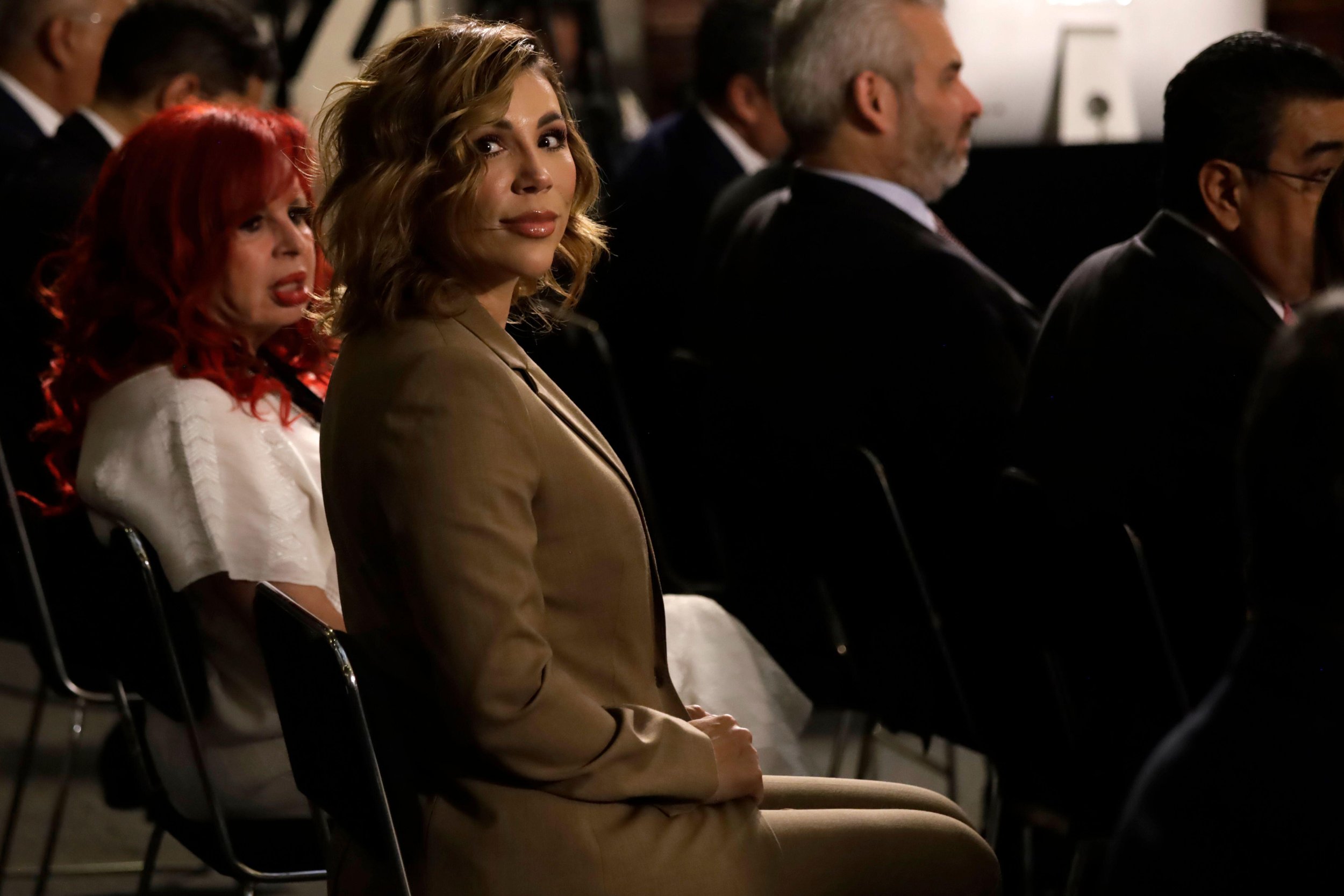
Baja California’s Governor, Marina del Pilar Ávila Olmeda, at an event in Mexico City last year. Image credit: Sipa US / Alamy.
by David Agren.
When US President Donald Trump alleged an “intolerable alliance” between drug cartels and the government of Mexico - made as he first unveiled tariffs on the country in January - Mexican President Claudia Sheinbaum bitterly objected.
She branded the claims “slander,” and shone a spotlight back on the US. “If there’s a place that such an alliance exists it’s with US gunmakers, which sell high-power weapons to these criminal groups,” she said.
Sheinbaum later showed White House evidence for its narco-alliance claim, which featured a news story on former public security secretary Genaro García Luna – a common foil for Sheinbaum and her ruling Morena Party – being convicted in a US court of taking bribes from the Sinaloa Cartel. She used the White House including his case as proof that drug-cartel collusion was a thing of the past.
That confidence appears to have been premature as US pressure to allow its security forces to operate on Mexico soil escalates – and politicians in the ruling party have the US visas revoked.
For her part, Sheinbaum has attempted to assuage Trump. She deployed 10,000 National Guard members to stop drugs and migrants. She abandoned her predecessor’s security policy of “hugs, not bullets” by arresting thousands of high-value targets and decommissioning hundreds of synthetic drug labs. Mexico even handed over 29 drug cartel bosses to the US.
Her actions haven’t gone unnoticed in Washington, but they don’t appear to be enough. With newly appointed US Ambassador to Mexico Ronald Johnson - a former Green Beret who has refused to rule out military intervention - arriving in Mexico City on Thursday, pressure is mounting to address the alleged ties between cartels and the political class.
Marina del Pilar Ávila Olmeda, Morena’s Governor of Baja California, revealed this week that her US visa has been revoked. Her husband, Carlos Torres – formerly a lawmaker with the PAN, but now active in Morena – lost his visa, too. Neither gave reasons for their visas being revoked, but both protested their innocence.
“We don’t know what’s happening,” Avila later told reporters. She also denied reports her US bank accounts had been frozen, saying she didn’t have any such accounts. Sheinbaum repeated the governor’s denial at her morning press conference. The president called it a “private matter” and “we haven’t received more information.”
The US Embassy in Mexico declined comment, telling the Associated Press that visa records are confidential. But stories surged of more Mexican politicians losing their visas.
A spokesman for Américo Villarreal, Governor of Tamaulipas and also a Morena party member, said claims of his boss losing his US visa “is information not confirmed by any authority.” (Villarreal faced accusations of illicit funds flowing into his 2022 gubernatorial campaign, claims he denies.)
ProPublica, however, reported the Trump administration was targeting “several dozen political figures who have been identified by law enforcement and intelligence agencies as having ties to the drug trade” for travel bans.
Reports of the travel bans angered many in Morena, though they continued to keep their criticism of Trump in-check.
Former government spokesman Jesús Ramírez, the coordinator of Sheinbaum’s advisors, derided the ProPublica story as a hit piece on the president “without proof, without witnesses, only rumours, with the aim of attacking the Mexican government for interventionist reasons.” Ramírez also tried attacking the story for its author, Tim Golden, who previously published a bombshell report on the DEA investigating accusations of money flowing into former president Andrés Manuel López Obrador’s 2006 campaign (AMLO denied the accusation).
The visa fracas comes amid stories of US security forces operating in Mexico. And Trump himself has urged Sheinbaum to permit US forces to confront drug cartels on Mexican territory, according to The Wall Street Journal – a proposal the Mexican president firmly rejected. “We will never accept intervention,” Sheinbaum subsequently said.
But suspicions continue mounting. The US Embassy in Mexico recently published an X post from Immigration and Customs Enforcement, showing photos from the dismantling of three fentanyl labs in Sinaloa “led by the ICE Homeland Security Investigations vetted unit within the Government of Mexico.”
The pro-government La Jornada newspaper reported the post, claiming US agents participated in the raids – forcing Sheinbaum to deny US involvement. The President responded with her usual bromides: “There is coordination, there is collaboration, there is cooperation, within the framework of respect for our sovereignty; there is no subordination, nor is there any participation of elements of any United States agency in any operation.”
But she also blamed – who else? – past presidents from the “neoliberal period,” which she and AMLO call the 30 years preceding his 2018 election.
“It was very different before, during the neoliberal periods … and particularly during the Calderón era, when the possibility of the agencies themselves being involved in the operations was opened up,” she said.
Economy Minister Marcelo Ebrard, who served as Foreign Minister under AMLO, concurred. He pointed to the laws limiting cooperation after the arrest and return of former General Salvador Cienfuegos, who was detained and charged with drug crimes in the United States but set free after Mexican government intervention.
“This also caused a lot of friction – I must say – at the time with the United States Embassy, with agencies, and others who were against this legislation,” Ebrard said.
“The status today is completely different from what it was before, to begin with, in terms of the legal obligations and restrictions that are in place.”
Sheinbaum speaks endlessly of “respect.” Trump himself speaks positively of Sheinbaum. But her efforts to stave off US intervention appear to be falling short of ever escalating US demands. She may end up needing to offer the US a narco-politician – possibly one from her own party – to sate Trump’s demands. Morena is known for protecting its own – however questionable – but handing one of its own over to US authorities would be preferable to US intervention.